
PROJECT
active
Appl-FM — Berlin Initiative for Applied Foundation Model Research
MISSION
The core goal of this project
The Berlin Initiative for Applied Foundation Model Research (Appl-FM) is a research impulse funded by the German Research Foundation (DFG) at the Berliner Hochschule für Technik (BHT), in cooperation with HTW Berlin. It launched in April 2024, runs until March 2029, and is led by spokesperson Prof. Dr. Felix Gers. The initiative develops pioneering methods for adapting foundation models to highly specialized applications in science, society, and industry, especially where data is scarce, sparse, multimodal, or continually arriving. The goal goes beyond individual models. Appl-FM aims to make publicly available foundation models usable for medical, scientific, and industrial use cases, so they are not reserved for the few organizations that can train them from scratch. At the same time, it brings the latest AI breakthroughs directly into BHT's curricula and creates new prospects for early-career researchers.
Overview
Foundation models are large, general-purpose machine learning models. They are trained once on broad data and then adapted to many different tasks. Like electricity or the steam engine, they show the hallmarks of a general-purpose technology: they are improving rapidly, spreading across fields, and spawning complementary innovations. Adapting them to new applications, however, is far from trivial and is sometimes impossible. This blocks their use in most industrial, medical, and scientific settings, and it is exactly the problem Appl-FM addresses.
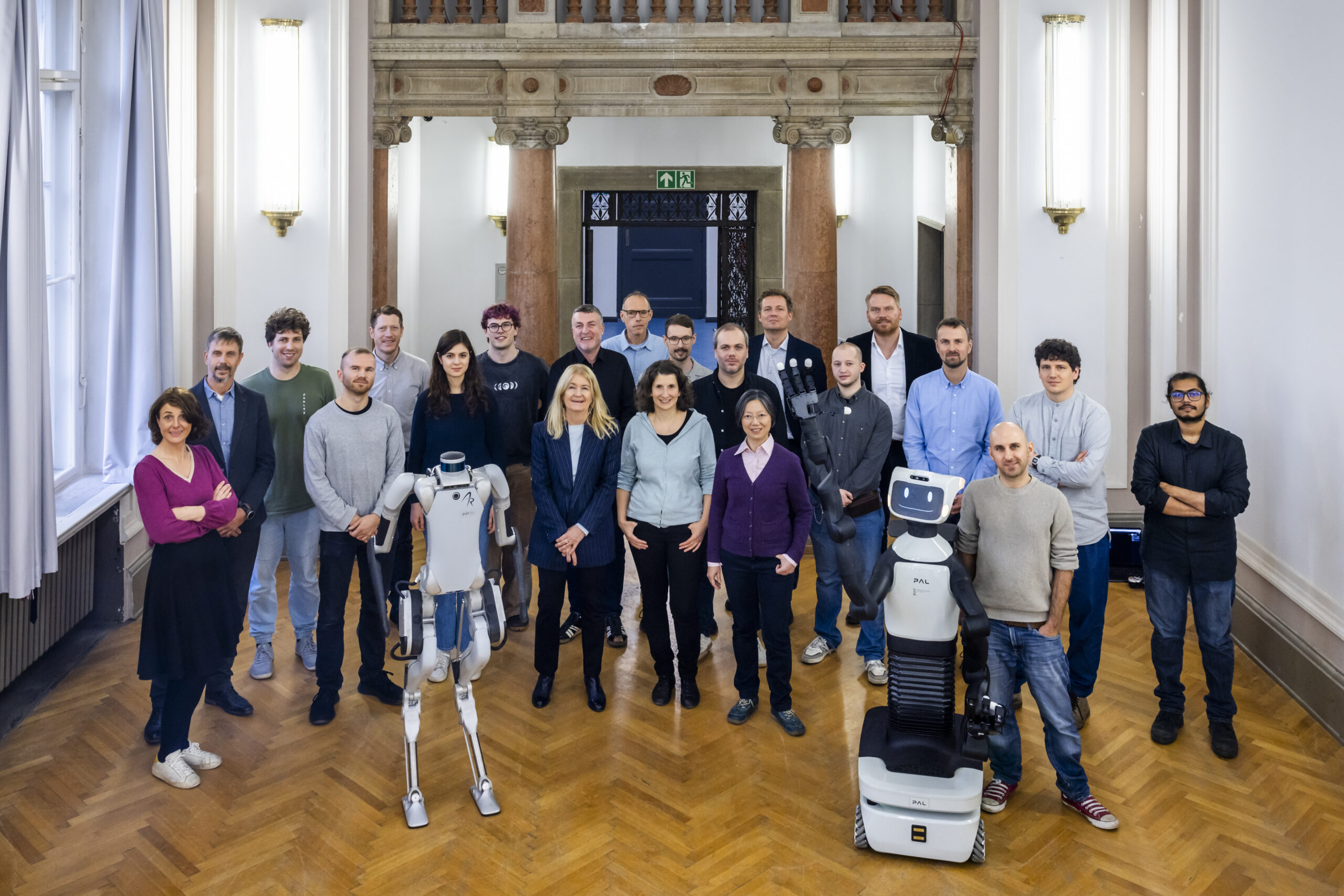
The initiative works on three research scenarios, each with its own challenge:
- Robotics: teaching robots human manipulation and locomotion skills by observing demonstrations, instead of through time-consuming recordings with human interaction.
- Quantitative biology and smart microscopy: extracting reliable quantitative information from imbalanced, rare imaging data in clinically relevant fields.
- Predictive medicine: supporting doctors with trustworthy decision support across a broad range of diseases, based on few, multimodal data.
Despite their differences, the three scenarios share core requirements. Models must learn from rare, sparse, and continually arriving data, handle multiple modalities, and be robust, fair, and explainable. To meet these requirements, Appl-FM focuses on four methods: brain-inspired architectures for continual few-shot learning, data-centric vision and motion learning with human feedback, automated holistic evaluation of robustness, fairness, and explainability, and the adaptation of text embeddings in multimodal settings.
In the long term, the initiative aims to make foundation models more accessible. Today, a few large technology companies dominate their development because they control the data, compute, and deployment infrastructure. Appl-FM counters this by developing methods to adapt publicly available models, both for well-studied domains and for neglected niche ones. It also strengthens the role of interdisciplinary academic research in a field that has so far been driven almost entirely by industry.
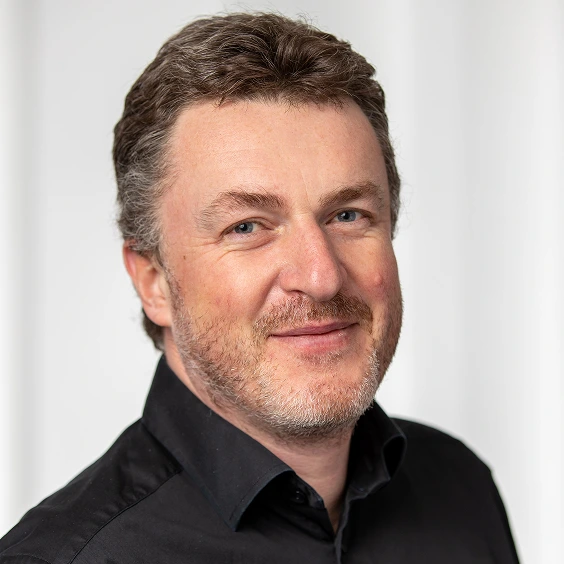
Within Appl-FM, two DATEXIS PhD researchers work across the research scenarios and methods. Jan Frick, supervised by Prof. Dr. Alexander Löser, works on predictive medicine. His focus is diagnosis prediction and medical reasoning from clinical text, including a benchmark that compares generative and encoder-based language models for clinical outcome prediction. His research is now moving toward self-improving systems and memory management at run time: models that keep learning and refining their knowledge while they are deployed, a direct answer to the challenge of continually arriving data.
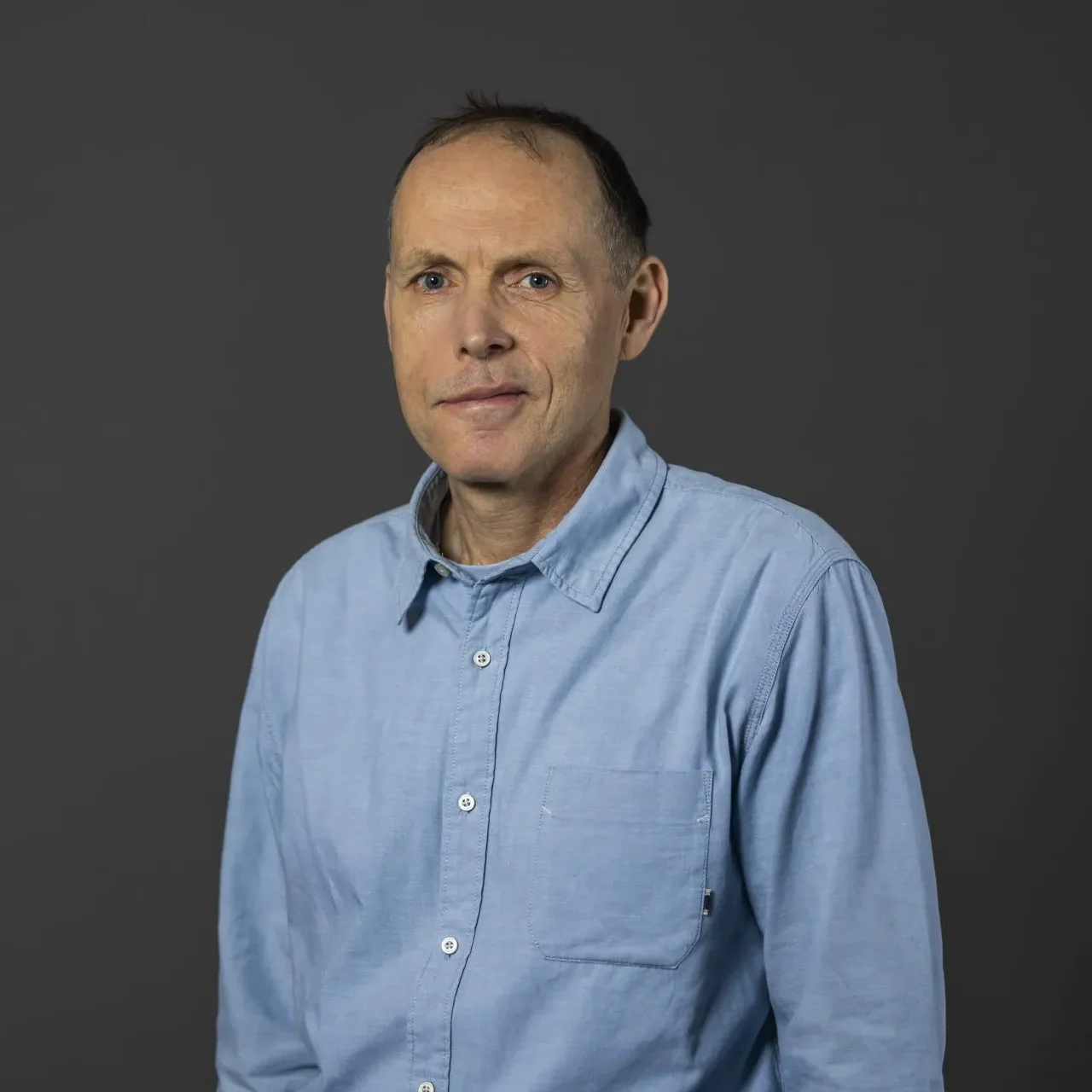
Justus Westerhoff, supervised by Prof. Dr. Felix Gers, focuses on biologically inspired machine learning and computer vision. His work covers brain-inspired representation learning, such as sentence embeddings modeled on fruit fly olfaction, and robust few-shot adaptation of foundation models. It also includes real-world robustness evaluation of multimodal models and, in quantitative biology, foundation-model-based microscopy analysis trained on synthetic data. Together, these contributions span few-shot and continual learning, vision, holistic evaluation, and text embeddings, the core methods of the initiative.
FUNDING BODY
Deutsche Forschungsgemeinschaft

GRANT ID
528483508
PERIOD
04.2024 - 03.2029
PARTNERS
TEAM · CONTRIBUTORS
Researchers involved


PUBLICATION
Research output
-
2026
EACL
CliniBench: A Clinical Outcome Prediction Benchmark for Generative and Encoder-Based Language Models
Paul Grundmann, Jan Frick, Dennis Fast, Thomas Steffek, Felix A. Gers, Wolfgang Nejdl, Alexander Löser
-
2025
NICE
Alexei Figueroa, Justus Westerhoff, Golzar Atefi, Dennis Fast, Benjamin Winter, Felix Alexander Gers, Alexander Löser, Wolfgang Nejdl
-
2025
JDMLR
Justus Westerhoff, Erblina Purelku, Jakob Hackstein, Jonas Loos, Leo Pinetzki, Erik Rodner, Lorenz Hufe
-
2026
PLOS Comp Biol
Mario Koddenbrock, Justus Westerhoff (shared first authorship), Dominik Siegfried Fachet, Simone Reber, Felix A. Gers, Erik Rodner
-
2025
TMLR
Justus Westerhoff, Golzar Atefi, Mario Koddenbrock, Alexei Figueroa, Alexander Löser, Erik Rodner, Felix A. Gers